- No products in the cart.




FLOATING TV UNITS: THE UK HOMEOWNER’S ULTIMATE GUIDE TO STYLISH SPACE, SMART STORAGE AND A CLEANER LIVING ROOM

30
Mar
Floating tv units have become one of the most searched-for furniture choices in modern British homes — and for good reason. They combine clean design, hidden storage, easier cleaning, better cable management and a far more spacious visual look than many traditional TV stands.
If you are searching for the right floating tv units for your home, you are probably not just looking for something that holds a television. You are looking for something that improves your entire living room.
That is exactly why this guide exists.
This is a practical, detailed, UK-focused guide to help you choose the right floating tv units for your room size, wall type, storage needs, interior style and long-term setup. Whether you live in a small flat, a semi-detached home, a terrace, a new-build or a larger open-plan property, the right unit can completely change how your room looks and functions.
By the end of this article, you will know:
- what floating tv units actually are
- why they are so popular in UK homes
- how to choose the right size
- what height they should be mounted at
- what materials and finishes work best
- how to plan storage and cable management properly
- what to think about before installation
- how to style them beautifully without clutter
If you want your living room to feel more modern, more open and more premium, floating tv units are one of the smartest upgrades you can make.
WHAT ARE FLOATING TV UNITS?
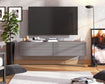
Floating tv units are wall-mounted media cabinets designed to sit off the floor rather than stand on legs or a plinth. Instead of taking up floor space like a traditional TV stand, they are fixed directly to the wall to create a sleek “floating” effect.
Most floating tv units are designed to:
- sit beneath a wall-mounted television
- hold media devices such as streaming boxes, games consoles and routers
- hide unsightly cables
- provide storage for remotes, accessories and living room clutter
- create a more intentional and polished TV wall
In simple terms, they do much more than just support your setup. They visually anchor the television and make the whole wall feel finished.
That matters more than many people realise.
A TV mounted on its own can often look disconnected, harsh or unfinished. Floating tv units help turn a blank wall into a proper entertainment zone.
WHY FLOATING TV UNITS ARE SO POPULAR IN UK HOMES
There are a lot of furniture trends that come and go. Floating tv units are not one of them.
They have become increasingly popular because they solve several real-life problems at once — especially in UK homes, where room sizes are often tighter and layouts can be more awkward than in larger overseas properties.
1. They make rooms feel bigger
One of the biggest benefits of floating tv units is visual space.
Because the floor remains visible underneath, the room feels more open. This is particularly effective in:
- smaller living rooms
- flats and apartments
- narrow terraces
- box rooms used as TV lounges
- open-plan spaces
Even if the room dimensions do not physically change, the floating design helps reduce visual heaviness and clutter.
2. They create a cleaner, more modern look
Floating tv units suit the way many people now want their homes to feel: simpler, cleaner and less bulky.
They work especially well in:
- minimalist interiors
- modern homes
- Scandinavian-inspired spaces
- neutral colour schemes
- contemporary family lounges
The absence of legs, base frames and heavy floor furniture instantly gives a more streamlined appearance.
3. They improve cable management
A huge reason people choose floating tv units is because they are ideal for hiding wires.
Most people today have more than just a television in their setup. They often also have:
- streaming devices
- broadband routers
- soundbars
- gaming consoles
- digital boxes
- smart home hubs
- charging accessories
Without proper furniture, all of this quickly becomes messy.
Floating tv units help keep everything contained and far less chaotic.
4. They are easier to clean
This is one of the most underrated benefits.
Because floating tv units do not sit on the floor, it is easier to:
- hoover underneath
- mop around the area
- avoid dust collecting around legs
- keep the space looking tidy
For busy homes, pet owners and people who hate awkward furniture cleaning, this is a genuine advantage.
ARE FLOATING TV UNITS A GOOD IDEA FOR SMALL LIVING ROOMS?
Yes — and in many cases, they are actually better for smaller spaces than standard TV furniture.
In compact UK homes, every bit of visible floor space matters. Floating tv units help a room feel less cramped by:
- reducing visual bulk
- making narrow rooms feel more open
- improving traffic flow
- keeping floor areas less obstructed
- making wall space work harder
This is why they are especially popular in:
- London flats
- modern apartments
- terrace houses
- snug lounges
- converted rooms
- small reception rooms
If your living room feels crowded or cluttered, one of the easiest ways to improve it is often by getting furniture off the floor.
HOW TO CHOOSE THE RIGHT SIZE FLOATING TV UNIT
This is where many people get it wrong.
A floating tv unit can look fantastic — but only if the proportions are right.
The wrong width, depth or placement can make the whole TV wall feel awkward.
Choose a unit wider than your TV
As a general rule, floating tv units usually look best when they are wider than the television itself. This helps create visual balance.
If the unit is too narrow, the TV can look oversized and unsupported.
A wider unit gives:
- better symmetry
- a more premium look
- more useful storage
- stronger visual grounding
Consider your wall width
Do not choose based on the TV alone. You also need to consider the full wall.
Measure:
- the total width of the wall
- the distance to nearby doors or windows
- nearby alcoves or chimney breasts
- radiator placement
- skirting and socket positions
A long floating unit can look brilliant on a wide feature wall, while a more compact design may be better for tighter spaces.
Think about depth too
A very deep unit can protrude too much into the room, especially in narrow spaces.
A very shallow one may look sleek but not be practical enough for your devices.
The best choice depends on what you need it to hold.
If you need storage for:
- consoles
- routers
- media boxes
- accessories
…make sure the internal dimensions are practical, not just the external look.
WHAT HEIGHT SHOULD FLOATING TV UNITS BE MOUNTED AT?
This is one of the most common questions people ask — and it matters.
Mount your floating tv unit too high, and the whole setup can feel awkward. Mount it too low, and it can look disconnected or impractical.
The best height depends on:
- your sofa height
- whether the TV is wall mounted
- your seated eye level
- your room proportions
- whether you want space for a soundbar
A common guideline is to first place the television at a comfortable viewing height, then position the floating tv unit beneath it in a way that feels visually balanced. Many guides and community discussions consistently centre this around seated eye-level comfort rather than simply filling the wall.
A practical rule of thumb
In many UK living rooms, floating tv units often work well when:
- the TV centre sits around seated eye level
- there is enough gap between TV and unit for visual breathing room
- the unit does not sit so high that it loses the “grounding” effect
The exact number varies by setup, but what matters most is comfort and balance — not copying a showroom blindly.
Common height mistakes
Avoid these common errors:
- mounting the TV too high because the wall is tall
- mounting the unit too close to the ceiling line of the wall composition
- leaving too much empty gap between TV and unit
- ignoring sofa height and actual viewing angle
A good TV wall should feel natural when you sit down — not like you are looking up at a display in a waiting room.
WHAT STORAGE SHOULD FLOATING TV UNITS HAVE?
Not all floating tv units are equally practical.
A lot of people buy based purely on appearance, then realise later that they have nowhere to put anything.
Before choosing, think realistically about what your setup includes.
Common things people store in floating tv units
- streaming devices
- soundbar accessories
- games consoles
- controllers
- charging cables
- remotes
- broadband hubs
- DVDs or media accessories
- board games or household bits
Open storage vs closed storage
Open storage is good for:
- easy access
- displaying décor
- devices needing ventilation
- soundbars or consoles
Closed storage is good for:
- hiding clutter
- maintaining a cleaner look
- making the room feel calmer
- reducing visible mess
For many homes, a mix of both is often ideal.
A well-designed floating unit should not just look clean in a product photo — it should help your room stay clean in real life.
THE BEST MATERIALS AND FINISHES FOR FLOATING TV UNITS
The material and finish you choose will affect:
- the overall style
- how easy it is to clean
- how durable it feels
- how well it suits your room
High gloss floating tv units
These are popular for a very modern look.
They work especially well in:
- contemporary homes
- monochrome interiors
- modern apartments
- sleek minimalist rooms
Benefits:
- reflect light well
- can help a room feel brighter
- look very clean and polished
Things to consider:
- can show fingerprints more easily
- may feel too sharp for softer interiors
Matt floating tv units
These have become increasingly popular because they feel more understated and premium.
Benefits:
- softer visual finish
- less reflective
- often easier to live with day-to-day
- work well in neutral and modern spaces
Wood-effect floating tv units
These are ideal if you want warmth as well as modern styling.
They work particularly well in:
- Scandinavian-inspired interiors
- earthy neutral rooms
- cosy contemporary spaces
- homes that need warmth rather than gloss
Wood-effect finishes help stop a TV wall feeling too cold or clinical.
WHAT COLOUR FLOATING TV UNIT SHOULD YOU CHOOSE?
This depends on the look you want.
White floating tv units
Great for:
- bright rooms
- clean modern interiors
- making spaces feel airy
Black floating tv units
Great for:
- bold modern contrast
- dramatic TV walls
- contemporary styling
Grey floating tv units
Great for:
- flexible styling
- modern neutral rooms
- homes with mixed décor tones
Oak or wood-effect floating tv units
Great for:
- warmth
- balance
- timeless styling
- natural, calm interiors
The safest long-term choice for many UK homes is often a neutral finish that works with future décor changes.
FLOATING TV UNITS AND CABLE MANAGEMENT
This is one of the biggest reasons people regret choosing the wrong unit.
A TV wall can look amazing in theory — then completely fall apart once cables, sockets, plug blocks and devices come into play.
Plan your cable management before you buy
Do not leave this until afterwards.
Think about:
- where your plug sockets are
- whether the TV is already mounted
- whether cables will run behind the wall or externally
- where your internet router will go
- whether your soundbar needs a visible position
- whether you need ventilation for consoles
Many floating TV setups work best when the cable routes and socket placement are considered in advance, especially in UK homes where plug depth and wall construction can affect the final look.
A good floating tv unit should not just hide clutter — it should be chosen around the clutter you actually have.
ARE FLOATING TV UNITS SAFE?
Yes — when properly installed.
But this is important:
Floating tv units are only as secure as:
- the wall they are fixed to
- the fixings used
- the weight they are designed to hold
- the quality of installation
Things to check before installation
- Is your wall solid brick, block or stud?
- Is the unit designed specifically to be wall mounted?
- Does the wall type support the load safely?
- Are you storing heavy devices inside?
- Has the TV wall also been planned properly?
Never assume any cabinet can simply be “made floating” unless it is genuinely suitable for that purpose. DIY discussions repeatedly point out that the structure of both the wall and the cabinet matters just as much as the brackets themselves.
If in doubt, professional fitting is worth considering.
FLOATING TV UNITS VS TRADITIONAL TV STANDS
If you are deciding between the two, here is the simple truth:
Choose floating tv units if you want:
- a cleaner modern look
- better floor visibility
- easier cleaning
- a more premium TV wall
- a more open-feeling room
Choose traditional TV stands if you want:
- easier repositioning
- no wall drilling
- more flexibility for rearranging furniture
- simpler setup in rented spaces
For many people, floating tv units win because they simply make the room look far more intentional and less temporary.
HOW TO STYLE FLOATING TV UNITS WITHOUT MAKING THEM LOOK CLUTTERED
This is where many otherwise nice setups go wrong.
A floating TV wall can look premium and elegant — or it can quickly become overcrowded.
The best styling rule: less, but better
Use a few carefully chosen pieces rather than filling every inch.
Good styling ideas include:
- one or two stacked books
- a small sculptural object
- a low decorative bowl
- a discreet candle
- a small trailing plant
- a framed object nearby, not necessarily on the unit itself
What to avoid
- too many ornaments
- tall décor that blocks the TV line
- random cables or chargers left visible
- overcrowding the top surface
- mixing too many colours and textures
Floating tv units look best when they still feel spacious.
The point is not to decorate every surface. The point is to support the clean look that made you want one in the first place.
THE BEST ROOMS FOR FLOATING TV UNITS
Although most commonly used in living rooms, floating tv units also work brilliantly in other parts of the home.
Great places to use floating tv units
- main living rooms
- snug rooms
- cinema rooms
- bedrooms
- loft conversions
- open-plan lounges
- home office lounge hybrids
They are especially useful in rooms where you want furniture to feel lighter and less intrusive.
ARE FLOATING TV UNITS JUST A TREND?
No — and that is one of the strongest reasons to choose them.
Unlike some interior trends that quickly date, floating tv units are tied to a broader shift in how people want their homes to function:
- cleaner layouts
- better use of space
- less visual clutter
- more intentional interiors
- furniture that feels integrated, not bulky
That makes them more of a long-term design direction than a passing trend.
FINAL THOUGHTS: ARE FLOATING TV UNITS WORTH IT?
If you want your living room to feel:
- more spacious
- more modern
- more organised
- easier to clean
- more visually polished
…then yes, floating tv units are absolutely worth considering.
The key is not just buying one because it looks nice in a photo.
The right choice comes from thinking properly about:
- your room size
- your TV size
- your storage needs
- your wall type
- your cable setup
- your interior style
Get those things right, and floating tv units can completely transform the way your room feels.
They are not just furniture.
They are one of the easiest ways to make a TV wall look more expensive, more intentional and more suited to modern British living.
FAQ SECTION
What are floating tv units?
Floating tv units are wall-mounted media cabinets that sit off the floor rather than standing on legs. They are designed to create a clean, modern look while providing storage for TV accessories, devices and cables.
Are floating tv units good for small living rooms?
Yes, floating tv units are ideal for small living rooms because they keep the floor visible, reduce visual bulk and help the space feel more open and less cluttered.
How high should floating tv units be mounted?
Floating tv units should usually be mounted in relation to your seated TV viewing height. The ideal setup is one where the TV feels comfortable to watch and the unit sits beneath it in a balanced, visually grounded way.
Are floating tv units safe?
Yes, floating tv units are safe when they are installed correctly using the right fixings for the wall type and weight load. Always check whether the wall and the unit are suitable for wall mounting.
Do floating tv units hide cables?
Yes, one of the main benefits of floating tv units is improved cable management. Many designs help conceal wires, plug leads and media equipment more neatly than traditional TV stands.
Are floating tv units better than standard TV stands?
Floating tv units are often better for people who want a more modern, space-saving and minimalist look. Standard TV stands may still suit renters or people who prefer easier repositioning.
What size floating tv unit should I buy?
A floating tv unit usually looks best when it is wider than the television itself and proportionate to the wall space available. It should also have enough internal storage for your devices and accessories.
What colour floating tv units are best?
The best colour depends on your room style. White and gloss finishes work well in bright modern interiors, while black, grey and wood-effect floating tv units are popular for more versatile, timeless styling.